
Indices
Oil, inflation and pressure on U.S. markets
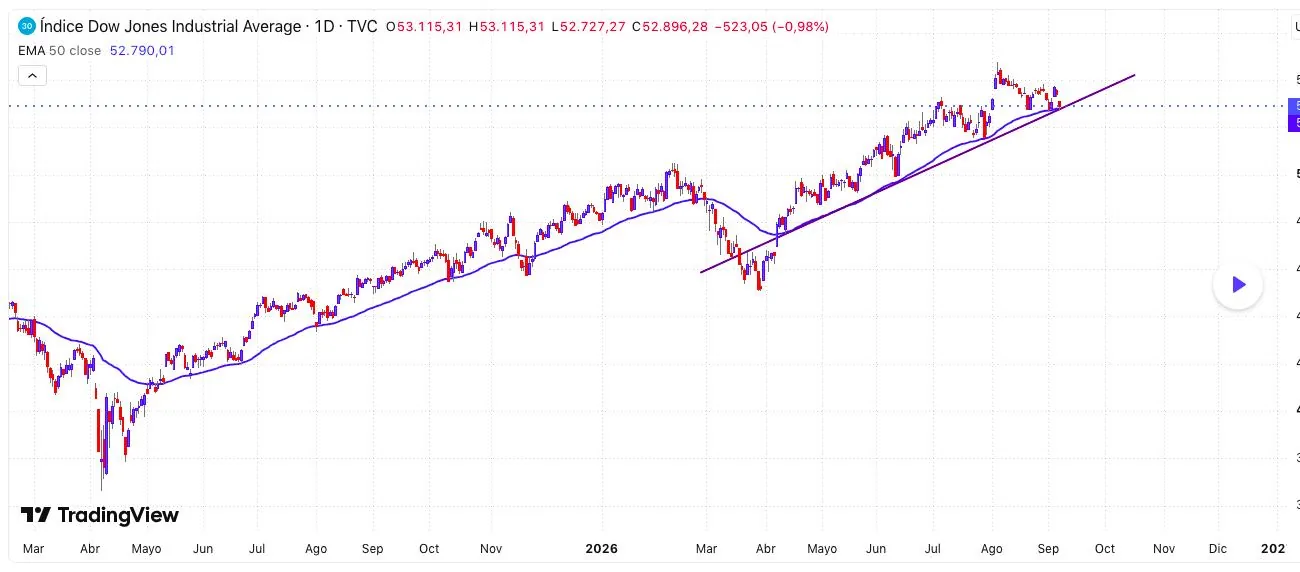
Oil near $100 raised the risk of a renewed inflation shock, supporting Treasury yields and the dollar while pressuring equities. Dow support at 52,700-52,800 became the key technical test.
Oil was again approaching $100 per barrel, increasing concern that higher energy costs could feed into inflation. That created a fresh challenge for central banks: an energy supply shock capable of slowing disinflation.
Energy risk changes the rates outlook
The issue extended beyond petrol and household energy costs. More expensive oil increased the risk that inflation would stay elevated for longer. Although some Federal Reserve officials had seen little pass-through to core inflation, Christopher Waller identified energy as a major upside risk.
Two-year Treasury yields reached their highest level since January 2025 as investors assigned more weight to restrictive policy or another rate increase. Markets priced roughly a 58% probability of a 25-basis-point rise at the 15-16 September meeting. This reversed earlier expectations of easier policy following comments from Chair Kevin Warsh and other FOMC members.
A stronger dollar weighs on risk sentiment
Higher oil, persistent inflation and firmer rate expectations lifted real and nominal yields. Interest-rate differentials and demand for defensive assets supported the U.S. dollar. In combination with geopolitical uncertainty, that backdrop weakened risk appetite and put selling pressure on major equity indices.
Dow support and the inflation calendar
The Dow Jones looked particularly vulnerable after a material correction. It was approaching support around its 50-day exponential moving average and the rising trend line from earlier lows. The 52,700-52,800 area was therefore critical. A decisive break, especially a daily close below the trend line, could confirm further deterioration.
U.S. PPI on Thursday and CPI on Friday were the week’s main catalysts. CPI was among the final major releases before the Fed meeting, and Waller had said the report would help determine whether he supported another increase.
Original analysis by Miguel A. Rodriguez, dated 8 September 2026.
This commentary is general market information, not investment advice. It does not take your objectives or financial situation into account, and past performance does not guarantee future results. Trading CFDs involves a significant risk of loss.