
Commodities
AI Loses Momentum and Gold No Longer Acts as a Safe Haven
The sharp correction on Wall Street is beginning to question the strength of the rally that has supported markets for much of the year.
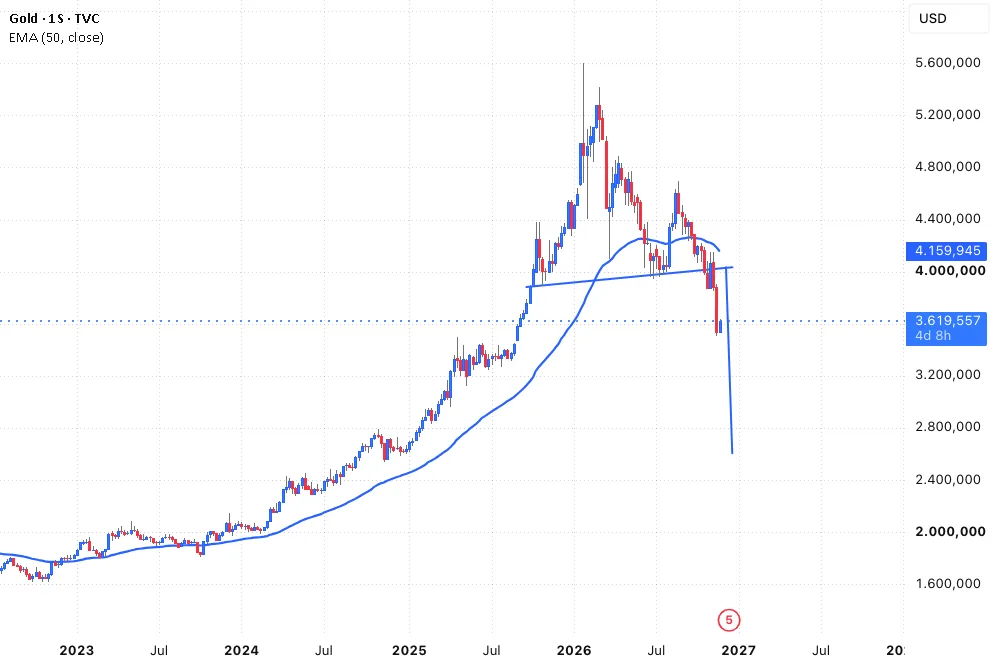
The sharp correction on Wall Street is beginning to question the strength of the rally that has supported markets for much of the year. Selling pressure has intensified, particularly across the technology sector, with the Nasdaq recording its worst weekly decline since March 2020, while the S&P 500 and Dow Jones have officially entered correction territory, falling more than 10% from their highs. The immediate catalyst has been growing doubts about valuations linked to artificial intelligence, as massive infrastructure investments, questions about future profitability and deteriorating market sentiment are beginning to outweigh corporate earnings performance.
Anthropic’s performance following its stock market debut, with shares falling 9.1% on their second trading day, and Nvidia’s plunge of nearly 14% on Friday have intensified pressure across the sector. Uncertainty has also increased around Nvidia, amid controversies surrounding chip sales and compliance-related concerns.
The Nasdaq 100 is approaching a price-concentration zone around 25,000 points, the loss of which could accelerate the sell-off. From a technical perspective, the next bearish target would be in the 22,500 to 23,000 range, implying a decline of more than 25% from its all-time highs.
The macroeconomic backdrop is also becoming less supportive, with the possibility of further interest rate increases by the Fed and the upcoming PCE inflation figures forcing investors to reassess monetary policy expectations.
However, what is particularly significant is that, amid the wave of selling, US Treasury yields have fallen sharply, with the 10-year Treasury yield declining to 4.93%, reflecting demand for government bonds as a safe-haven asset. At the same time, the dollar has regained momentum and strengthened, suggesting that the combination of uncertainty, higher interest rate expectations and demand for liquidity is favouring the US currency.
One of the most striking developments in this market turmoil, however, is the behaviour of gold, which, rather than benefiting from uncertainty and falling equity markets, is facing significant selling pressure. The metal appears to have temporarily lost its traditional safe-haven status, a phenomenon that can be explained by several factors. First, during periods of heightened volatility and widespread liquidation, investors tend to prioritise liquidity, selling even assets held for protection purposes to cover positions, reduce exposure or meet cash requirements. Second, a stronger dollar, higher interest rate expectations and the prospect of the Fed maintaining a restrictive monetary policy reduce the relative attractiveness of an asset that offers no yield. Central bank purchases also appear insufficient to offset the selling pressure currently affecting the market.
From a technical perspective, the deterioration in gold’s chart suggests that further downside may be ahead, with the risk of progressively breaking key support levels and extending the decline below $3,000 per ounce. If the dollar remains strong, interest rates stay elevated and investors continue liquidating assets that have accumulated substantial gains, a correction towards the $2,600 area could become a medium-term target. Gold’s current behaviour highlights that, during certain periods of market stress, safe-haven status is not determined solely by geopolitical risks or declining risk appetite, but also by liquidity dynamics and the immediate need to preserve capital.
Original analysis by Miguel A. Rodriguez, dated 23 November 2026.
This commentary is general market information, not investment advice. It does not take your objectives or financial situation into account, and past performance does not guarantee future results. Trading CFDs involves a significant risk of loss.