
Crypto
Bitcoin holds its strength as the fundamental picture shifts
The dollar strengthened and gold fell after Jackson Hole, yet Bitcoin remained resilient. Its divergence puts the $81,200 resistance and $97,600 target zone in focus.
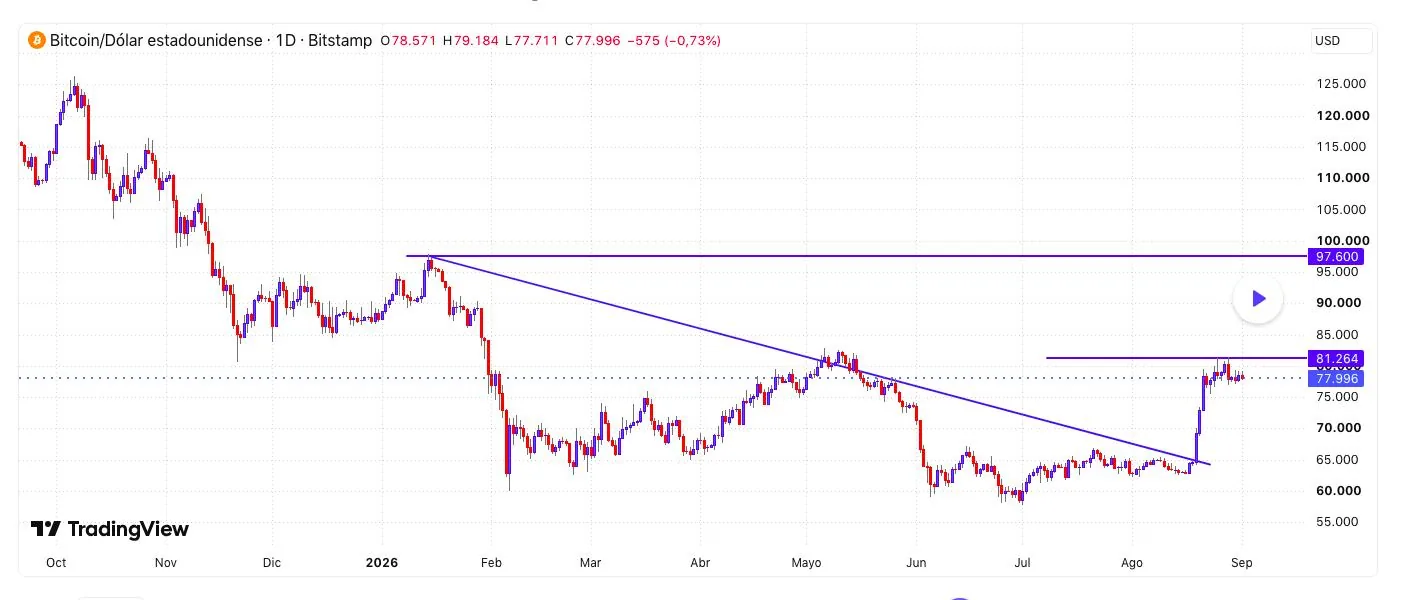
Bitcoin dipped only briefly after Federal Reserve Chair Kevin Warsh tightened financial conditions again in his Jackson Hole speech. It then recovered and continued to consolidate near recent highs.
Rates moved the dollar and gold
Bitcoin, gold and the U.S. dollar have historically responded to changes in interest rates and liquidity. When Warsh argued that overall financial conditions were difficult to describe as restrictive, markets treated the remarks as resistance to recent easing and began to price higher rates. The two-year Treasury yield rose by more than 15 basis points, the dollar strengthened and gold fell sharply.
Bitcoin did not fully follow that pattern. Demand may increasingly reflect asset-specific structural factors, including perceived scarcity, greater use in institutional portfolios and flows into linked investment vehicles. Some investors may also regard tighter rate expectations as temporary while retaining a constructive medium-term view of liquidity and institutional demand.
A divergence worth watching
Gold and the dollar returned towards levels seen before the U.S. Treasury’s bond-buyback announcement, while Bitcoin remained resilient near its highs. The divergence matters because it suggests that Bitcoin may be responding more to its own demand flows and less to its traditional interest-rate relationship.
The technical levels
With the fundamental drivers shifting, technical signals could carry more weight. The downtrend line in place since October 2025 broke to the upside after the Treasury’s buyback announcement.
The first resistance to watch is $81,200. A clear break would improve the bullish structure and open the way towards the next target zone around $97,600.
Original analysis by Miguel A. Rodriguez, dated 1 September 2026.
This commentary is general market information, not investment advice. It does not take your objectives or financial situation into account, and past performance does not guarantee future results. Trading CFDs involves a significant risk of loss.