
Commodities
Central Banks in Focus: A Key Week for the Dollar and Gold
Markets are facing a particularly busy week, with several central bank meetings that could reshape interest rate expectations and increase volatility across financial markets.
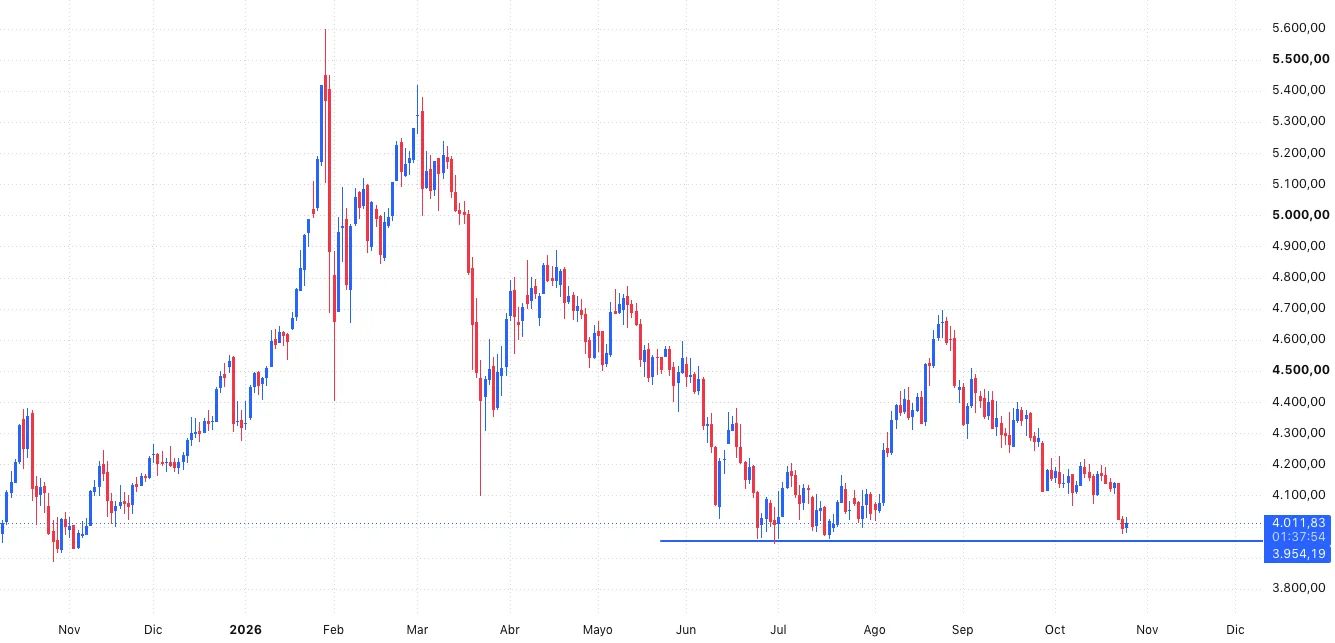
Markets are facing a particularly busy week, with several central bank meetings that could reshape interest rate expectations and increase volatility across financial markets. The main focus will be on the US Federal Reserve (Fed) and the European Central Bank (ECB), although policy decisions from the Bank of Canada, the Reserve Bank of New Zealand and the Bank of Japan will also be on the agenda.
The Fed and the ECB Take Centre Stage
In the United States, the most likely scenario is for the Fed to leave interest rates unchanged at its October 27–28 meeting. However, the key factor will be the message accompanying the decision. Persistent inflationary pressures and a resilient economy could encourage a more hawkish tone, leaving the door open to further rate hikes in the coming months.
On Thursday, attention will turn to the ECB, which also faces a challenging environment. Although no immediate changes in interest rates are expected, inflation trends, rising energy prices and tensions in bond markets will influence its outlook. A more hawkish-than-expected message could alter expectations for European monetary policy, although its impact on the euro will also depend on the Fed’s stance.
In addition to the central bank decisions, investors will be watching US growth and inflation data closely. Third-quarter GDP and the core Personal Consumption Expenditures (PCE) price index, one of the Fed’s preferred measures of inflation, will be crucial in assessing whether the economy remains strong enough to keep interest rates elevated for longer.
The Dollar and Interest Rates Hold the Key to Gold
Against this backdrop, the US bond market will be particularly important. If the Fed adopts a more hawkish tone, signalling a preference for maintaining restrictive monetary policy, US Treasury yields could come under further upward pressure. This scenario would tend to support the dollar and weigh on gold, which pays no interest and becomes less attractive as the opportunity cost of holding the metal rises alongside bond yields.
Gold has already undergone a significant correction amid a stronger dollar and rising US Treasury yields. The $3,950 per ounce area stands out as an important technical level if selling pressure resumes.
Ultimately, even if both the Fed and the ECB leave interest rates unchanged, the tone of their communications will be decisive. If their messages reinforce expectations that rates will remain high for longer, the dollar could retain its strength, while gold could face further downside pressure, with $3,950 emerging as a potential target for the correction.
Original analysis by Miguel A. Rodriguez, dated 26 October 2026.
This commentary is general market information, not investment advice. It does not take your objectives or financial situation into account, and past performance does not guarantee future results. Trading CFDs involves a significant risk of loss.